Product & Brand Designer at a health-tech startup
- Client
- Kumi Health
- Role
- Product & Brand Designer
- Year
- 2026
- Services
- Product Design, UI/UX, Design System, Motion
What should we work on today, Anja?
Click to ask Kumi a question …
Transkript
LiveRollenfokus
Mehr zu diesem Fall wissen, Sophie?
- Product Design
- UI/UX
- Design System
- Motion
Overview
Kumi Health is a German health-tech startup building a platform for hospital management. Since 2023, I have designed how its new AI features integrate into clinicians’ daily workflows, and how the product is presented to hospitals and investors.
Add AI to a clinical product in daily use — without asking doctors to relearn it. Kumi Health is a German health-tech startup whose platform already runs in hospital wards. The next step was AI: speech recognition, AI documents, SOP templates and a medical expert chat. I was brought in to design how these features enter the product, and to turn a young brand into a system the team could scale.
- 01High stakes, low tolerance for change. Clinicians work under time pressure; any new pattern competes with habits built over years.
- 02An existing product, not a blank canvas. The interface was dense and the design system half-finished, partly mid-migration to Tailwind.
- 03Product and brand under one owner. I designed the features and the story that sells them, so both speak the same language.
Product design
Approach
Understand the system first, then decide what to change and what to leave alone. I start by mapping how the product is used, what it can technically carry and what the business needs, before proposing anything new.
- 01Workflow first. I traced how a doctor moves through the patient's treatment view — every AI feature now starts there, with no separate tool and no context switch.
- 02Extend, don't rebuild. I audited the existing components and extended them instead of starting a new design system. Trade-off: less visual freedom in exchange for features that ship into the product immediately.
- 03Prototype in code to decide faster. After first flows in Figma, I rebuilt the core screens in Lovable, so the team could judge ideas in a working product rather than in static frames.
Key decisions
AI that appears where the doctor already is.
- 01Compact by default, detail on demand. The recording widget is a small control that expands into a live transcript only when needed, so the treatment view stays readable.
- 02Answers grounded in this patient. The expert chat lives inside each patient record and uses its context, instead of being a generic chatbot.
- 03One context, many roles. A physician, a therapist and a coding specialist ask different questions about the same case — answers adapt to the role.
Treatment view
Every feature starts here, in the patient treatment view clinicians use daily. I rebuilt it in Lovable as a working prototype — including team messages, tasks, the AI chat and the recording widget.
Rollenfokus
Mehr zu diesem Fall wissen, Sophie?
● Interactive prototype: messages, tasks, AI chat and recording widget.
AI Scribe and recording widget
AI Scribe records the doctor–patient conversation and turns it into a transcript and a short summary. I designed its entry point as a compact control in the treatment view that expands into the live transcript.
Transkript
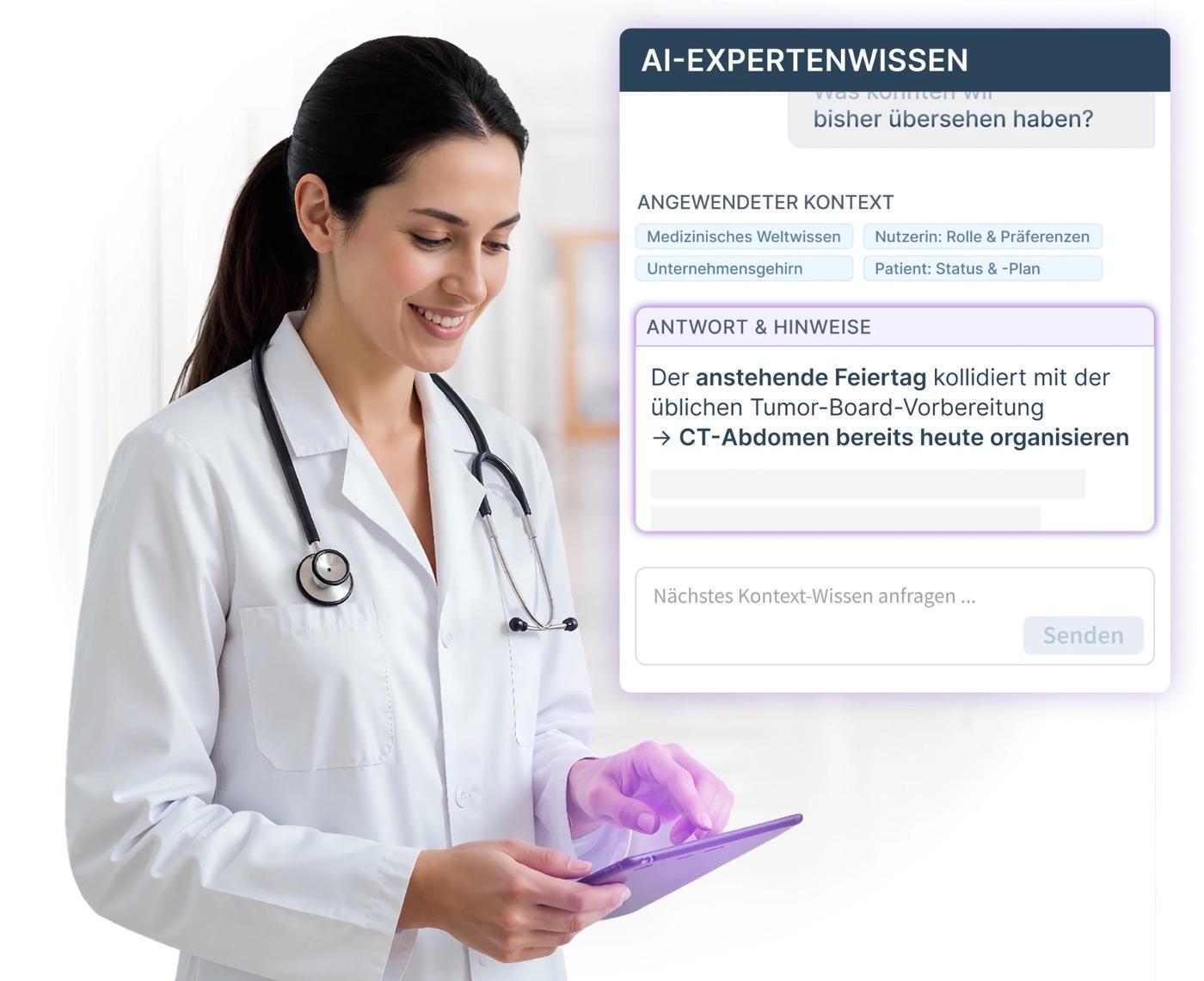
LiveAI-Expertenwissen
Clinical decision support inside the patient record. Answers take into account both medical guidelines and the hospital’s own context.
AI-Expertenwissen · try it
Ask about the patient — Kumi checks guidelines and the hospital’s context before it answers
Woran sollen wir heute arbeiten, Anja?
Klicken, um Kumi eine Frage zu stellen …
Angewendeter Kontext
Antwort & Hinweise
Treatment plan and SOP templates
Medical guidelines and the hospital’s own knowledge — departments, roles and SOPs — applied directly to the patient’s treatment plan, without leaving the treatment view.
Hospital knowledge
House rules, teams and SOPs in one context
Kumi-Docs
Generates clinical documents such as patient and doctor’s letters from selected sources. Clinicians review the extracted facts, choose a template and approve the draft.
Kontext-Quellen
Kumi Falldaten
Sprachaufnahmen
1 Aufnahme · 04:12
Dateien
Vorlage
Stammdaten
Stammdaten:
Diagnose / Cave
Beurteilung:
Erstellte Dokumente
Noch keine Dokumente. Wähle eine Vorlage und generiere.
● Interactive prototype: select a template and sources, edit facts, upload a file and generate a draft.
Role-based context
The same case raises different questions for a therapist, a senior physician or a coding specialist, so I designed the answers to adapt to the role of the user.
User lens
Every role gets answers for its own job
Integrations
Kumi operates alongside the hospital’s existing systems. Connectors define which sources it reads from and writes to, such as email, calendar and document management.
Integrations
Plugs into the tools a hospital already uses
Konnektor hinzufügen
Brand design
Brand system
Evolve the brand into a system the team can run without a designer. Kumi's identity was recognisable but applied inconsistently. I kept its core and turned it into reusable rules and templates.
- 01Refine, don't replace. The brand keeps its recognition, with a consistent visual language across every touchpoint.
- 02Templates instead of one-off files. Pitch-deck and print templates let the team build new materials themselves, on-brand.
- 03A self-serve website. Built in Framer with a clear content structure, so the team publishes without a designer.
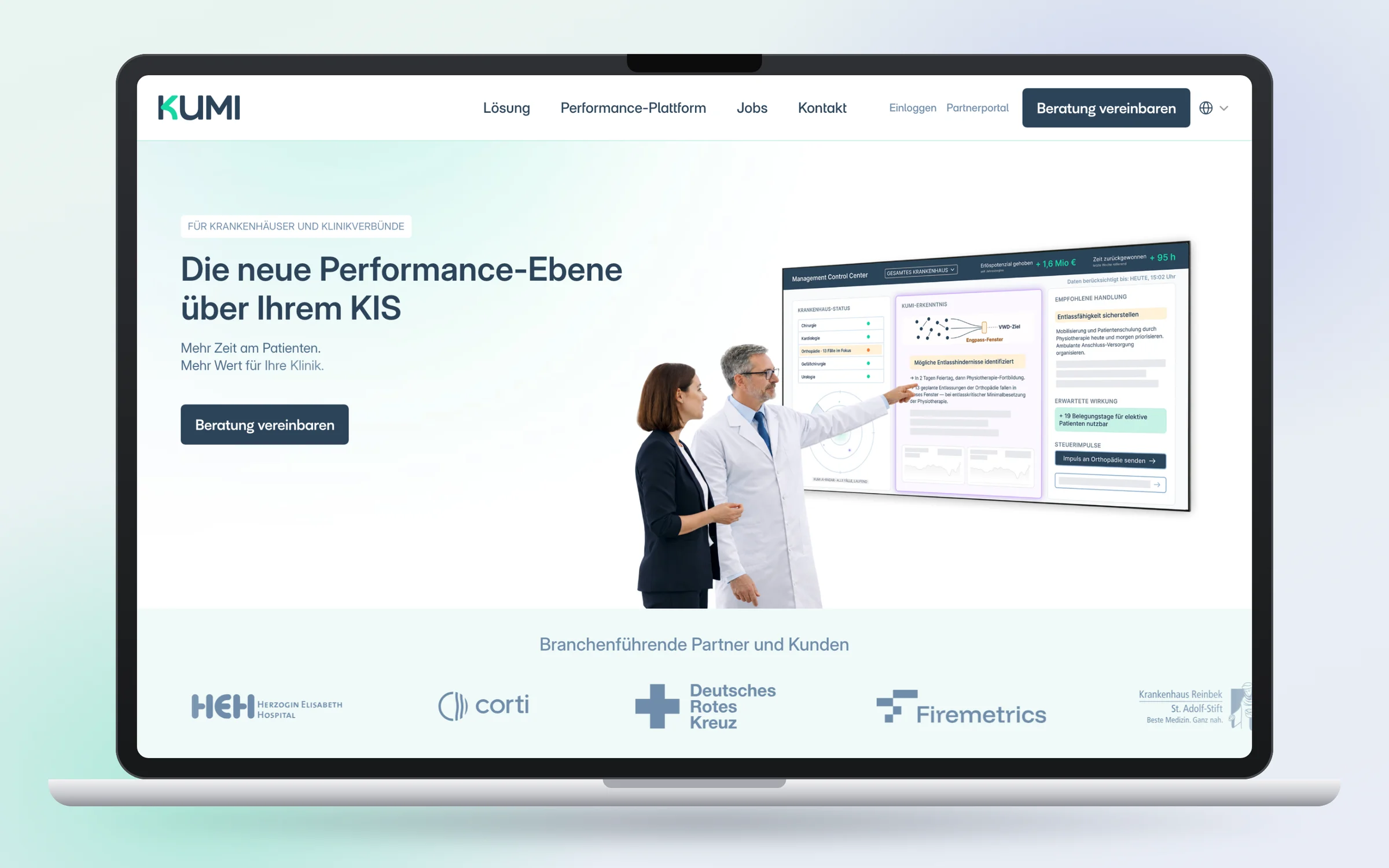
Product video
Motion design, every visual and the final edit — showing how AI Scribe and AI-Expertenwissen support a doctor's day.
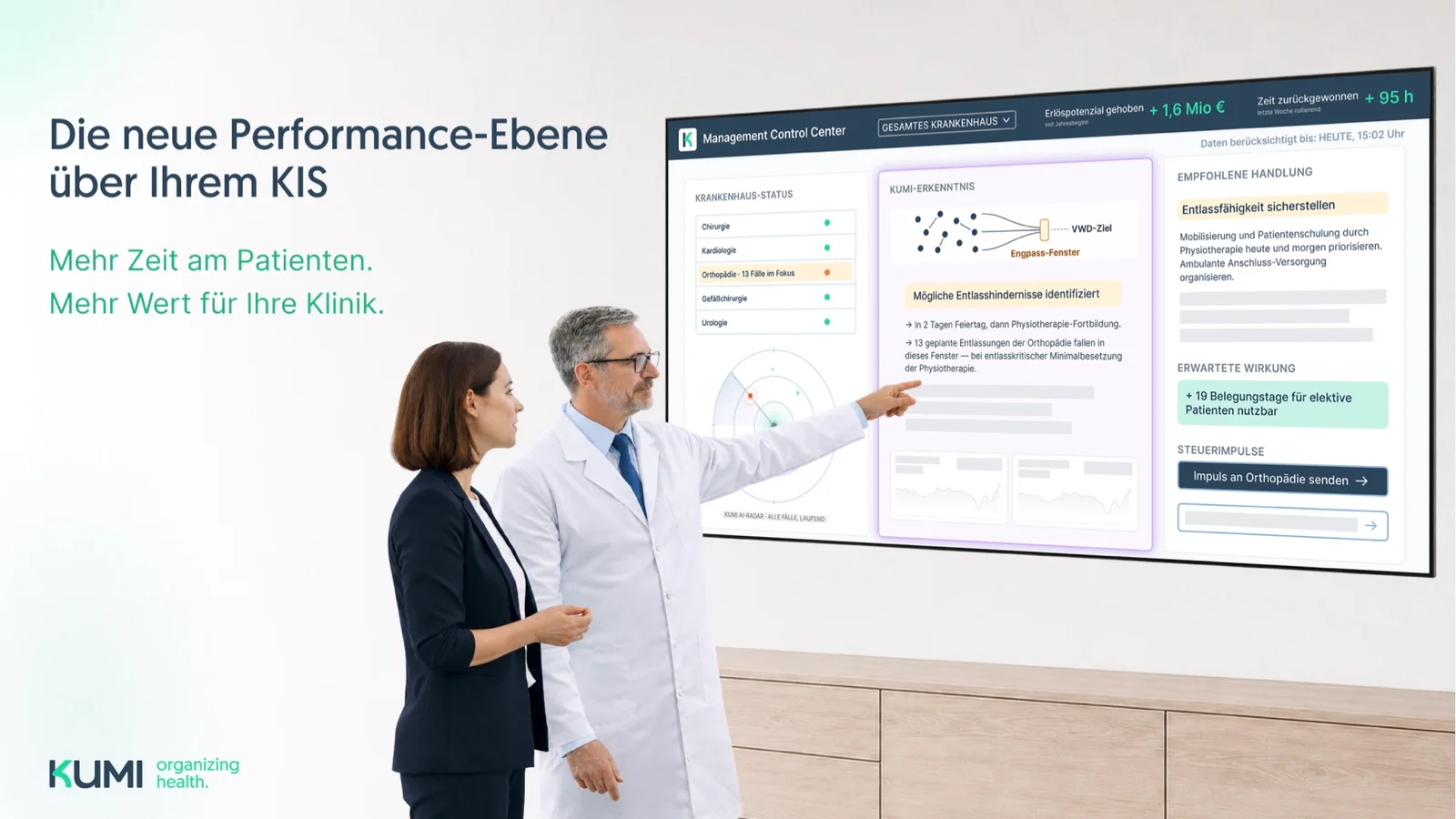
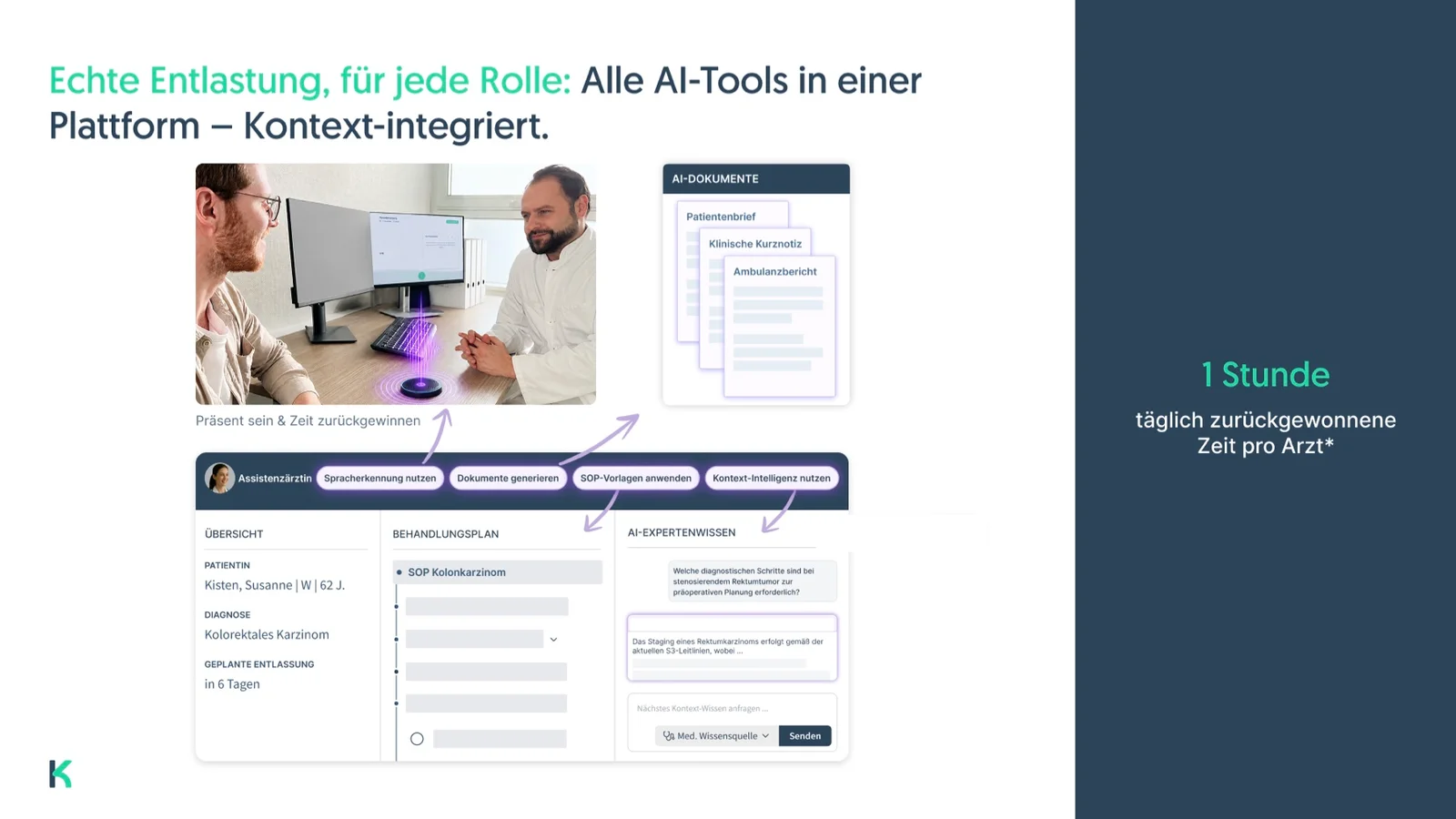
Pitch deck
The product story for investors and hospitals, with diagrams that explain how the platform sits on top of the hospital system.
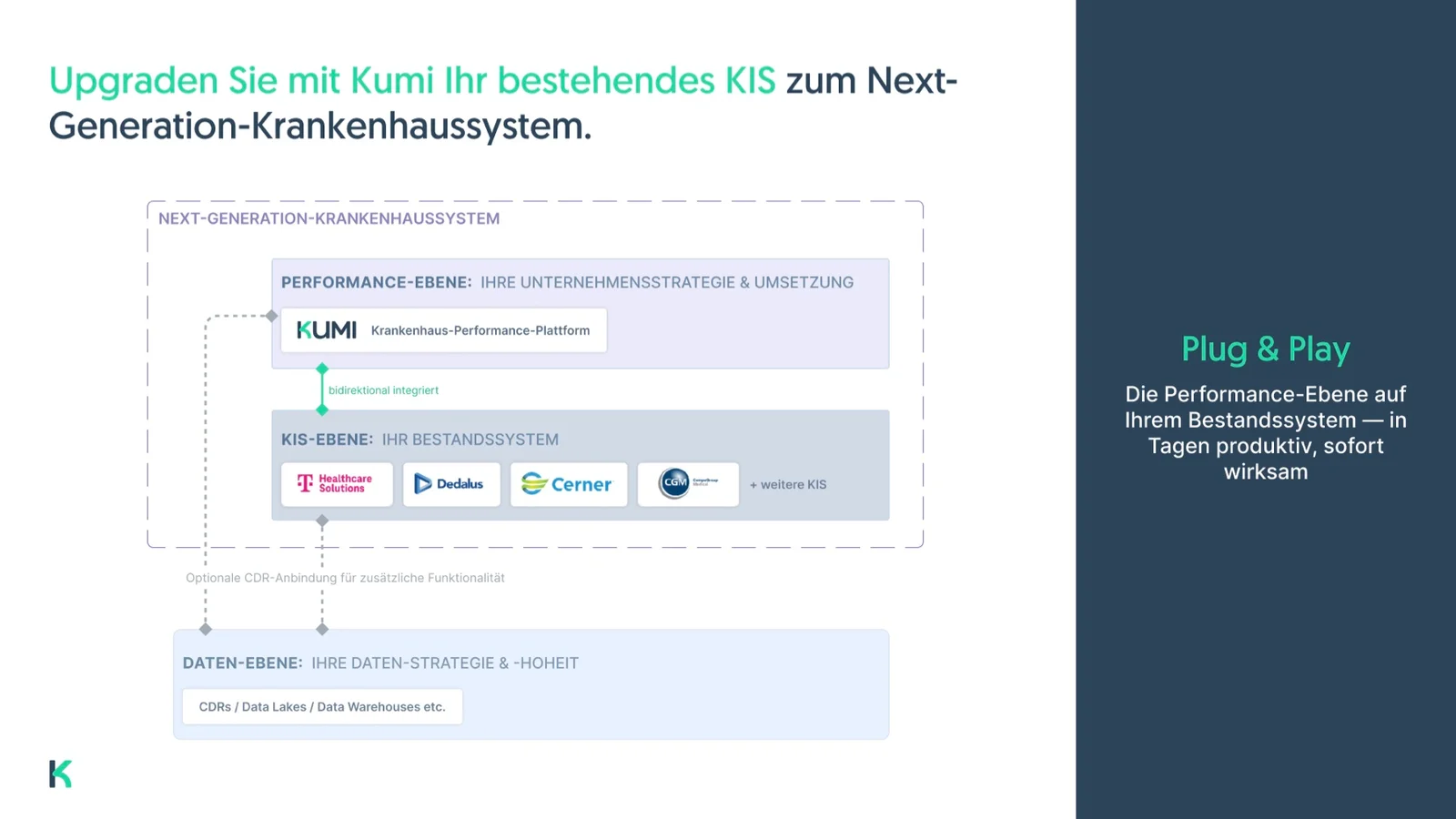
AI Radar
A visual metaphor I created to make the AI Radar easy to grasp for investors and hospitals: it screens cases around the clock and highlights revenue and length-of-stay potential.
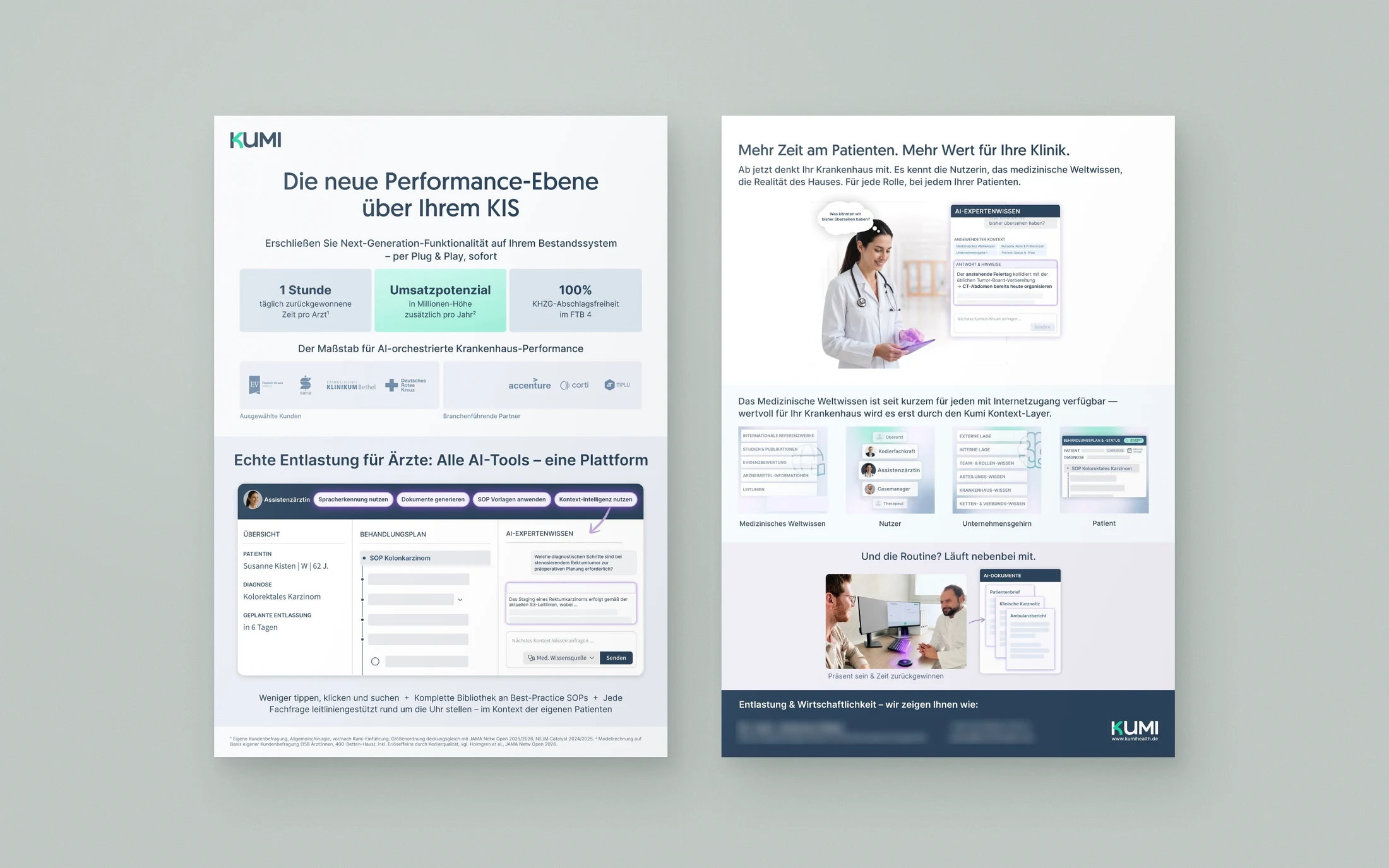
A sales two-pager that tells the product story on one sheet, front and back.
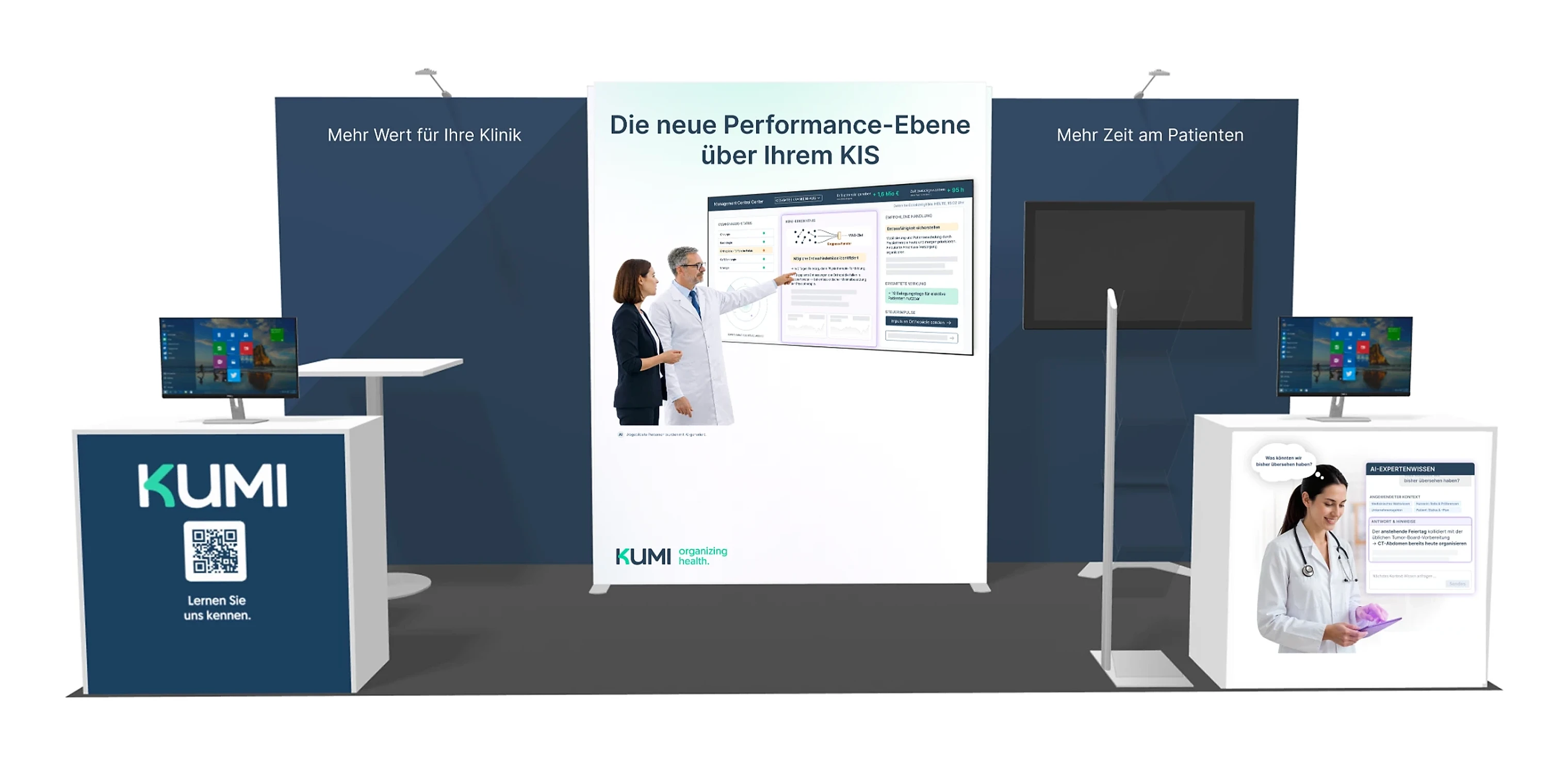
Trade fairs
The trade-fair stand — back walls, counters and light boxes in the same visual language.
Impact
Live in two large German hospitals. The AI features are used in daily clinical work, and the website, deck and videos support every conversation Kumi has with hospitals and investors.
Key takeaways
- 01In a mature product, fit matters more than novelty. The features that went live were the ones placed inside the existing treatment view, not the ones that asked doctors to go somewhere new.
- 02Coded prototypes change the conversation. A clickable Lovable prototype got faster, more concrete feedback than Figma frames.
- 03A brand scales through templates, not through a designer. The more the team can produce on its own, the more consistent the brand stays.
Results
- large German hospitals use the AI features daily
- 2large German hospitals use the AI features daily
- AI and product features designed and prototyped
- 6AI and product features designed and prototyped
- ongoing collaboration since
- 2023ongoing collaboration since
Next case · Proso Energy
Brand system for a solar energy company